We give a dam. Here’s why you should too!
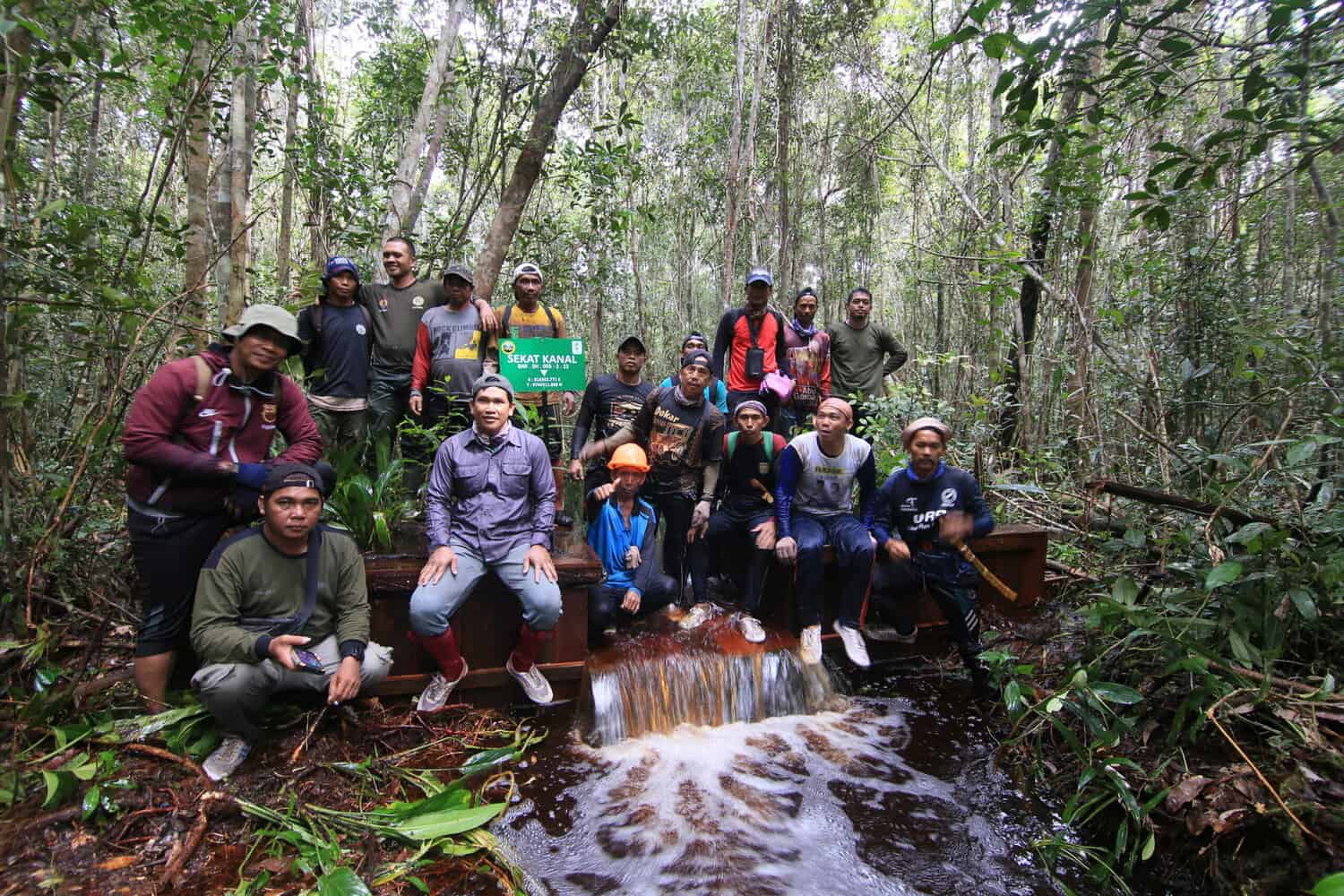
These dams are good dams! These vital dams restore peat swamp rainforest and protect the lives of one of the largest populations of orangutans on Earth. That’s why Orangutan Outreach and our partner, Borneo Nature Foundation, are co-leading the “Give a Dam About Orangutans” Earth Raise Campaign beginning April 22nd – Earth Day! Read about the importance of the dams in this blog written by the team at BNF.
Date Posted: April 15, 2026
Written by: Olivia Pilmore-Bedford, Communications Officer, Borneo Nature Foundation International
Conventional wisdom suggests that dams are universally bad for wildlife, that they disrupt natural processes and damage critical wetland ecosystems. However, there are some exceptions to the rule. Rather than diverting water away from where it would normally go, dams can help to prevent peatland drainage by blocking manmade canals, creating a natural buffer against forest fires. Here at Borneo Nature Foundation, we give a dam – and that’s a good thing!
Trees have become synonymous with carbon capture, but peatlands store three times more carbon than all the planet’s forests combined. Borneo’s peat-swamp forests have the best of both worlds, balancing our global climate and providing vital habitat for the island’s rich biodiversity.
Our main working area lies within a vast peat-swamp forest in southern Borneo. This forest harbours one of the largest populations of wild orangutans anywhere on Earth, as well as gibbons, wild cats and thousands of other rare and endangered species. Here, 215 tree species have been recorded in a limited survey area of 500km² – to put things in perspective, that’s more than twice the number of tree species found in the entirety of the UK, an area almost 500 times the size.

Borneo’s peat-swamp rainforests are home to large numbers of Critically Endangered orangutans | Photo: Jack Lammas
Peat forms under waterlogged conditions when dead plant matter does not fully decay, instead accumulating over thousands of years as carbon-rich peat deposits up to 20-metres deep. In addition to being the world’s largest terrestrial carbon stores, these underground peat deposits act like a giant sponge, absorbing water to prevent flooding during the wet season, and retaining it as a buffer against fires during the dry season.
In their natural state, these tree-covered wetlands remain flooded year-round, protecting them from fire. However, the peat-swamp forests of southern Borneo are drying out. Although large-scale logging has not taken place here since the 1990s, a vast network of drainage canals remains. Once used to float timber out of the forest, these canals leach water from the peat-swamp, stripping it of its natural fireproofing. During the dry season, fires spread easily through the parched forest, releasing millions of tons of greenhouse gases into the atmosphere.
Peatland fires behave unlike any other fires on Earth and are incredibly difficult to extinguish once they have taken hold. These so-called “zombie fires” can burn invisibly below ground for weeks on end, turning entire root systems to ash and decimating globally important carbon stocks. The consequences can be devastating – but the solution is surprisingly simple. Block the canals, stop the drainage and re-wet the peat. In short: dam it!
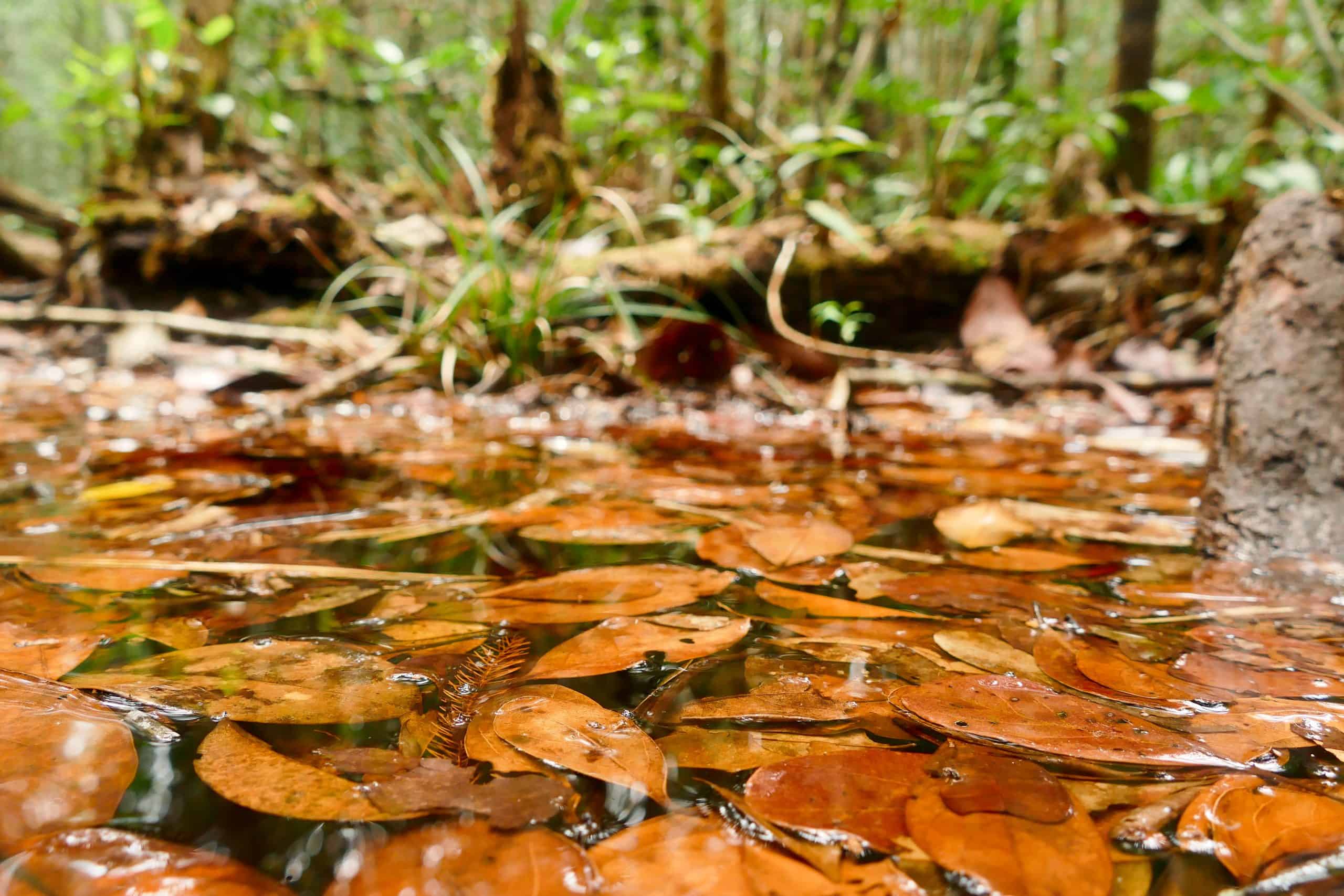
Wet peat is naturally fire-resistant | Photo: BNF
Having identified peatland drying as a major driver of fires, in 2010 we began mapping drainage canals and constructing dams across critical flow points. Dams slow the rate of dry season drawdown by up to 70%, raising the water table and keeping the peat wet year-round. So far, we have built 943 dams and successfully blocked 30 canals, restoring many hectares of peat-swamp forest. The dams are built using sustainably sourced timber and then planted with native seedlings. As the seedlings grow into mature trees, their roots will form a natural dam. From there, forest litterfall will fill in the canals naturally, restoring the ecosystem to its pre-logged, pre-drained state.
Local communities play a vital role in peat-swamp restoration, with many relying on peatland forests for clean water, fire and flood protection, livelihoods, and more. That is why we hire community members alongside BNF staff to help build the dams, providing sustainable income to several local families. Moreover, as a research-led organisation, monitoring and evaluation are a key aspect of our programmes. We believe in evidence-based conservation management, taking an agile approach in line with emerging best practices. Over the years, our dam designs have changed dramatically as we learn more about these unique tropical ecosystems and how to protect them.
We give a dam – do you?
In future, we hope to expand our damming programme throughout southern Borneo, blocking drainage canals wherever the damaging legacy of logging remains. However, this will take time and depends wholly on the support of our partners, donors and individuals like you. Thank you for giving a dam with us.
Orangutans Need Your Help!
Thank you for your generous support in these challenging times.
Donate Adopt