How Do Orangutans Undergo Their Annual Health Checks?

Date Posted: September 26, 2025
Text by: BOS Foundation Communications Team at Samboja Lestari, East Kalimantan
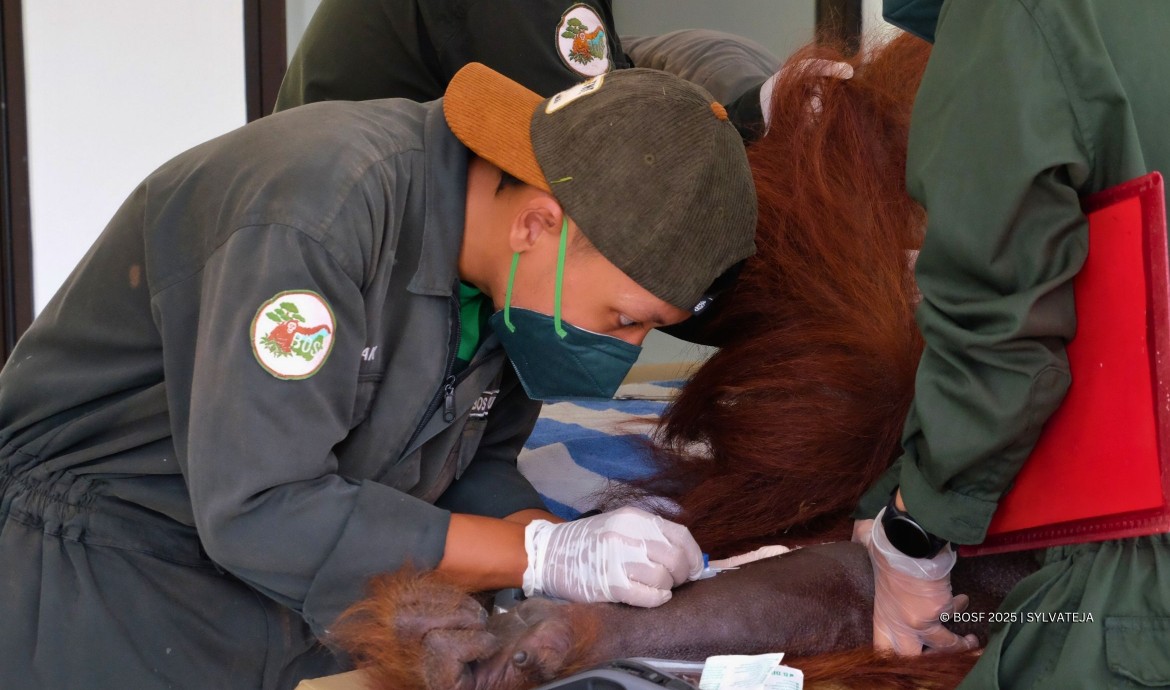
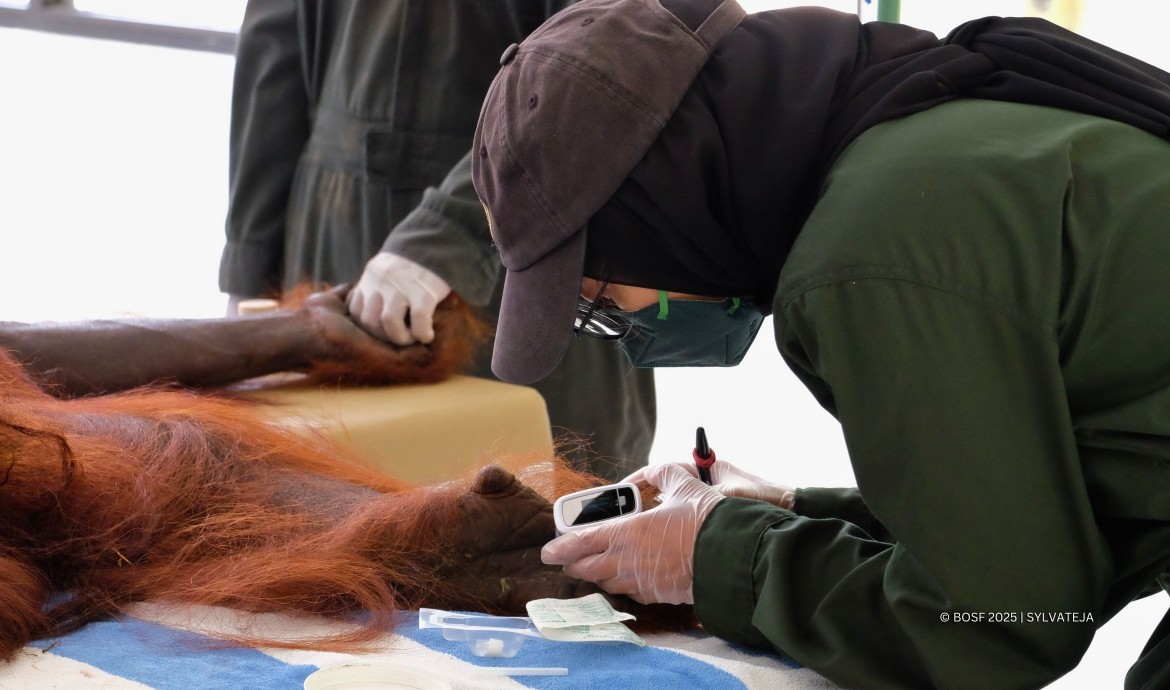
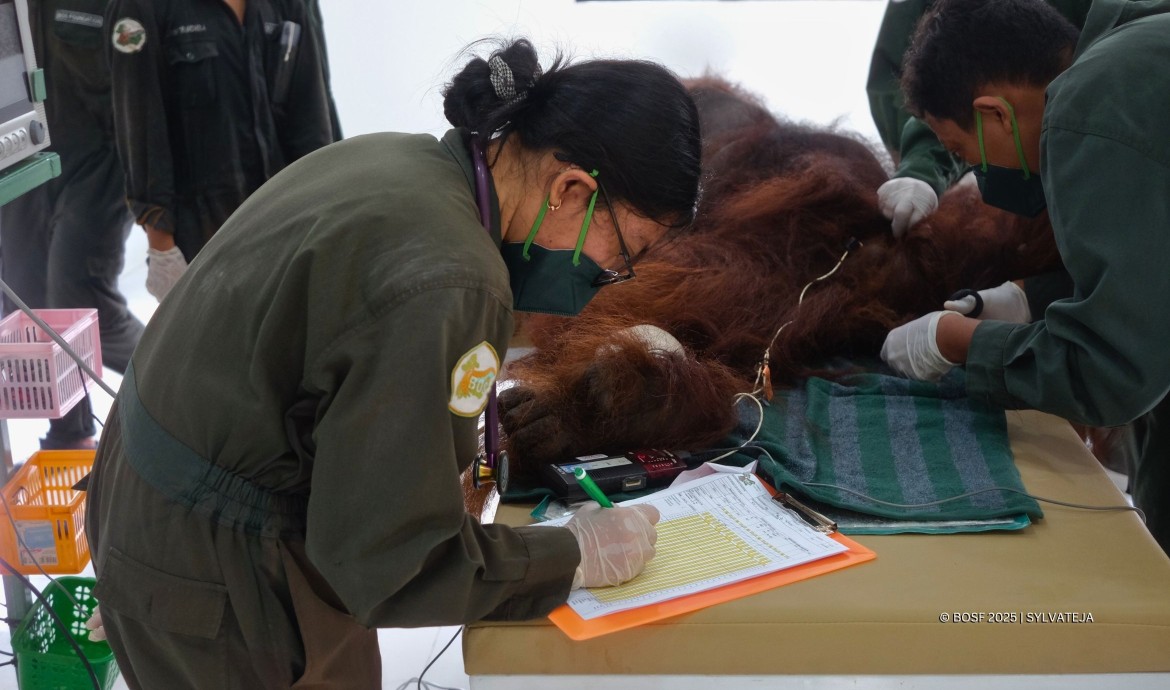
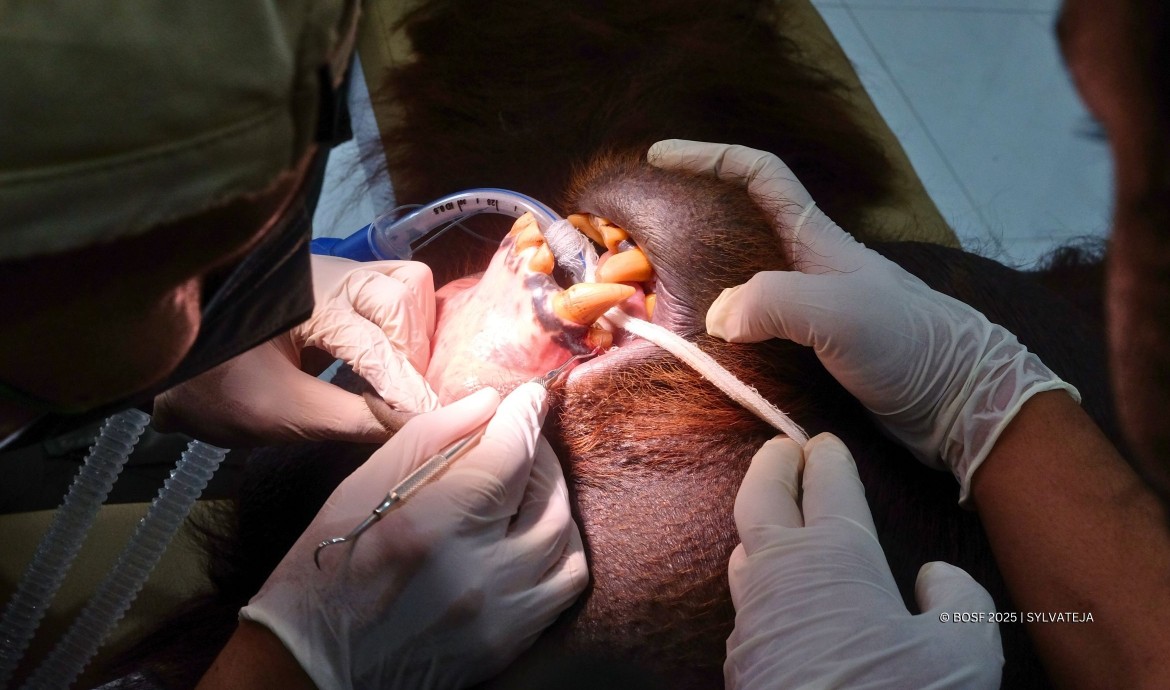
At the BOS Samboja Lestari Rehabilitation Center, routine health checks are conducted every year to ensure the well-being of orangutans under care. Recently, our medical team, animal welfare team, and technician team at Samboja Lestari conducted a general examination of several rehabilitated orangutans at our rehab centre.
The purpose of this examination is to closely monitor the health of the orangutans. Any individual showing signs of illness is immediately separated from the group to receive more intensive treatment and to prevent the spread of disease to others.
The Medical Examination Process
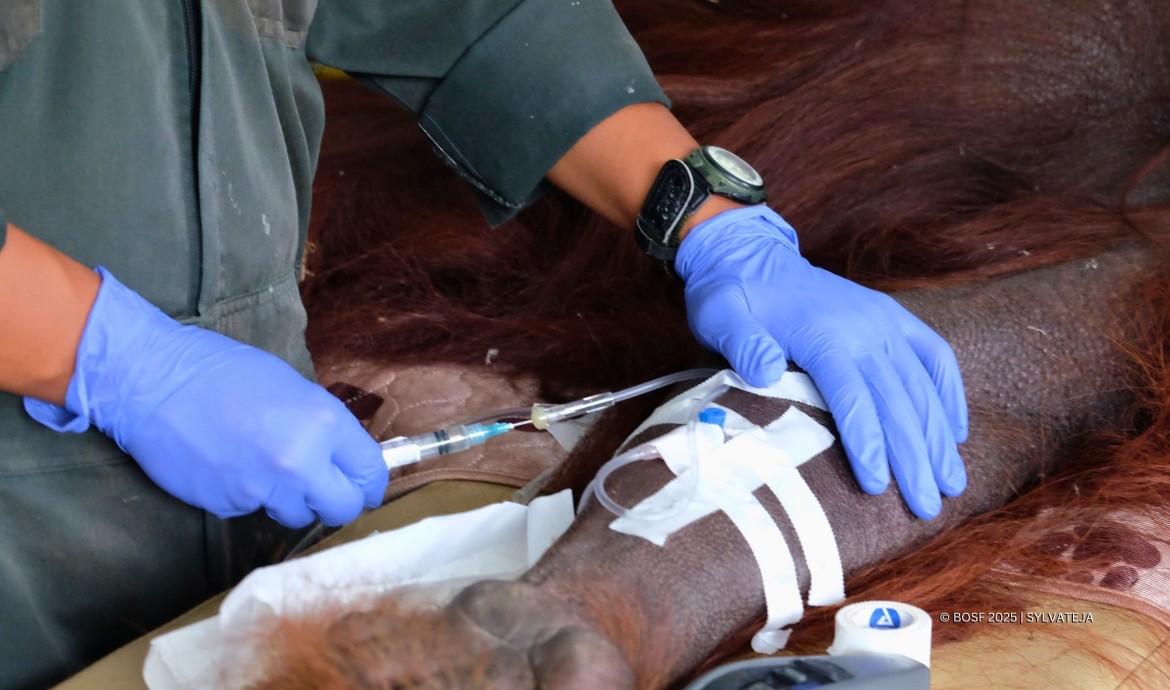
The health checks involve a wide range of procedures, including blood sampling and bronchoscopy examination (Bronchoalveolar Lavage or BAL). Further tests include complete blood counts, liver and kidney function tests, blood typing and rhesus factor, cholesterol and uric acid levels, as well as screenings for hepatitis, malaria, dengue, and tuberculosis using methods such as culture and PCR.
Read also: DERMATITIS CASES IN ORANGUTANS
This process is time-consuming and requires considerable manpower. It begins with sedation, which is often one of the most challenging steps. Technicians must distract the orangutans, as many dislike the sight of darting equipment.
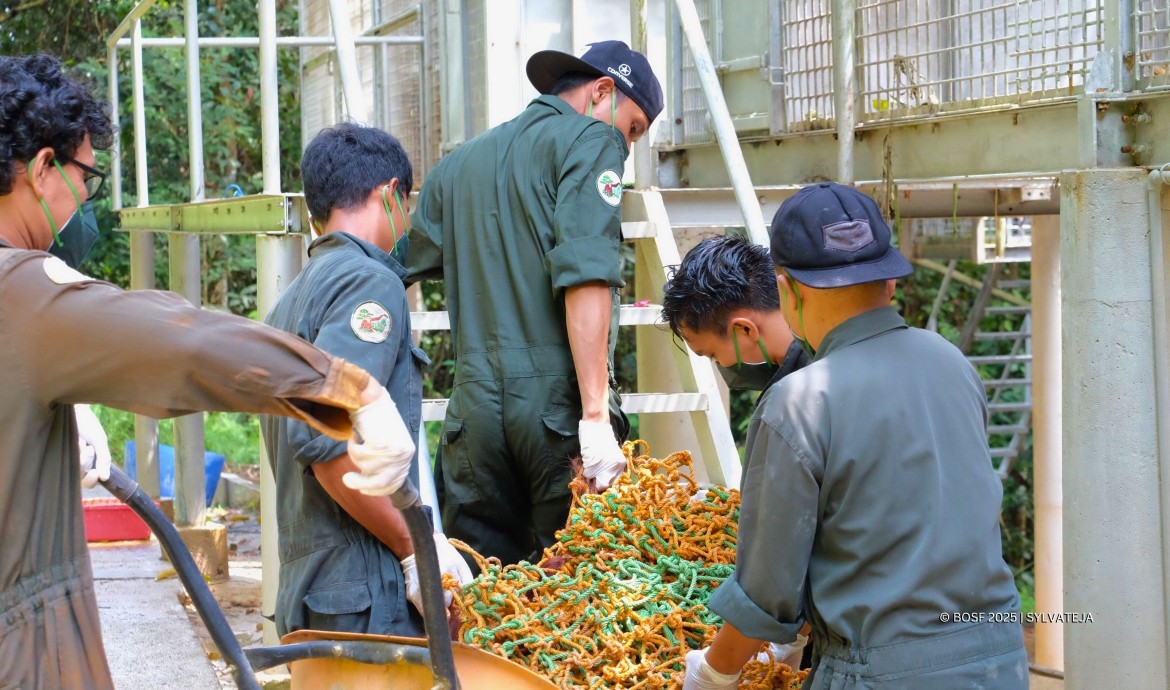
Some orangutans become aggressive, making sedation more difficult. Once the orangutan is safely sedated, the team must work together to carry the individual to the clinic. A task that requires multiple people due to the animals’ significant body weight.
Results and Follow-Up Actions
Overall, the results of this year’s health checks showed that all orangutans were in good physical condition. However, several individuals required follow-up actions. Bagus, Combat, BoySopo, and Antony were moved to Socialization Enclosure A.
Read also: DENTAL EXAMINATION IN ORANGUTANS
Through these comprehensive medical examinations, the team at Samboja Lestari remains committed to safeguarding the health of every orangutan in rehabilitation. With good health and strength, these orangutans will have a better chance of returning to their true home: the forest.
Orangutans Need Your Help!
Thank you for your generous support in these challenging times.
Donate Adopt
Adopt an Orangutan
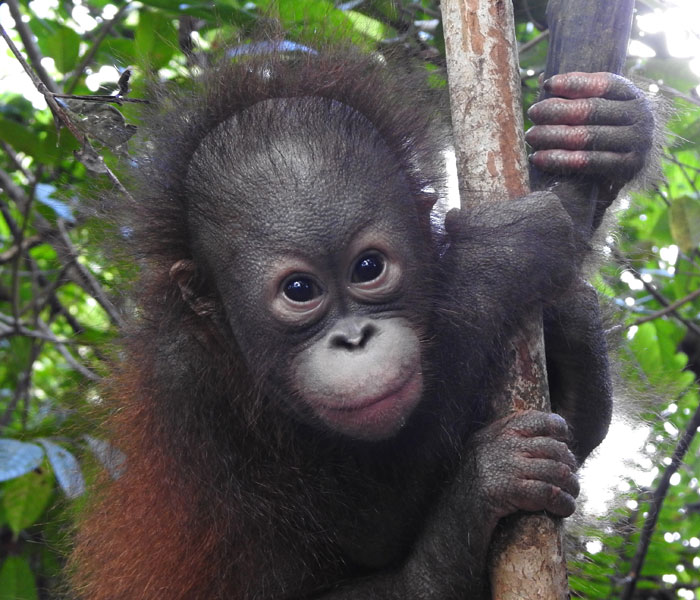
Galaksi
Galaksi is a juvenile orangutan in forest school who is small but mighty. With friends at his side, he turns each day into an adventure.
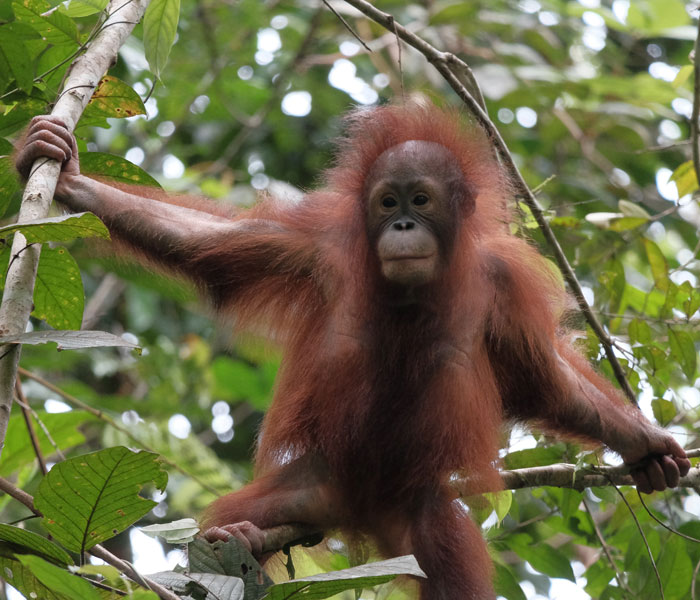
Jenny
Jenny is quickly growing in forest school where she has transformed from an easily frightened infant into a clever & cheeky toddler.
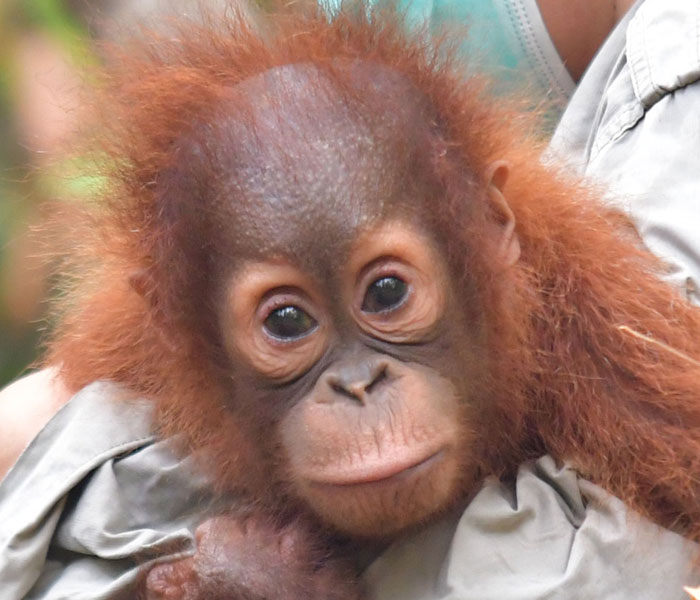
Rumba
Rumba has overcome physical challenges in forest school to show us that with patience and perseverance anything is possible.
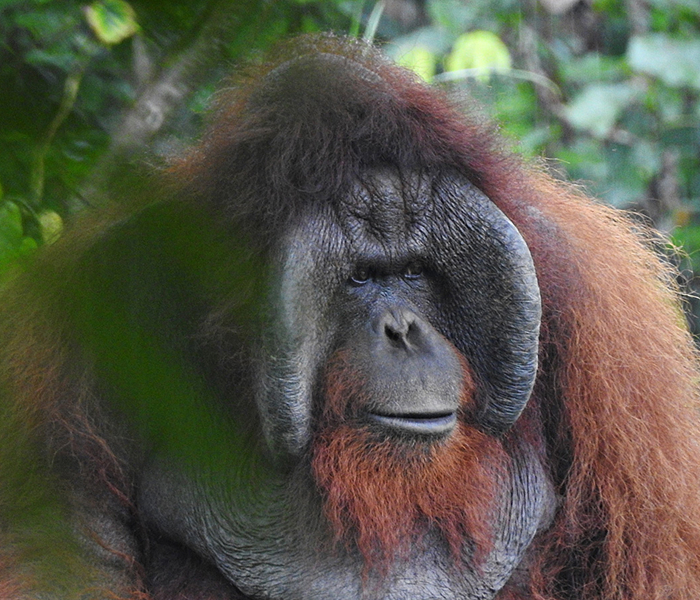
Papa
Papa is a gentle adult orangutan rescued from the illegal pet trade and now enjoying life with companions in long-term care.
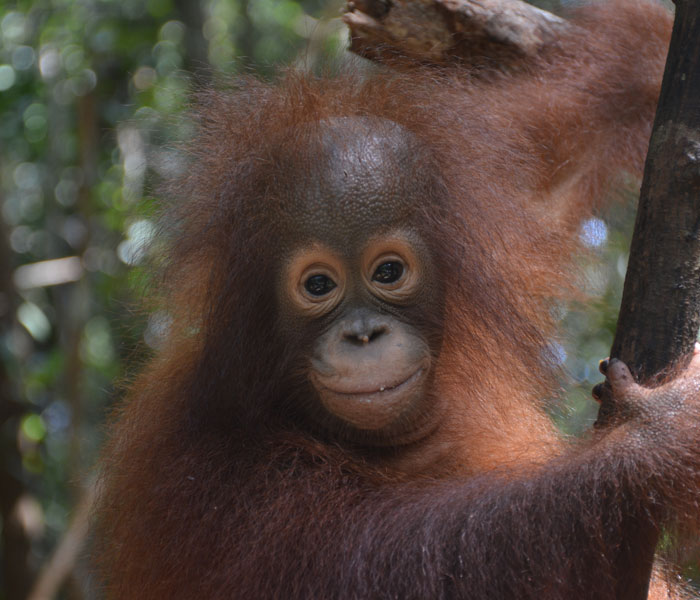
Selfie
Selfie is a young orangutan and an adventurous soul whose independence is growing everyday in Forest School.
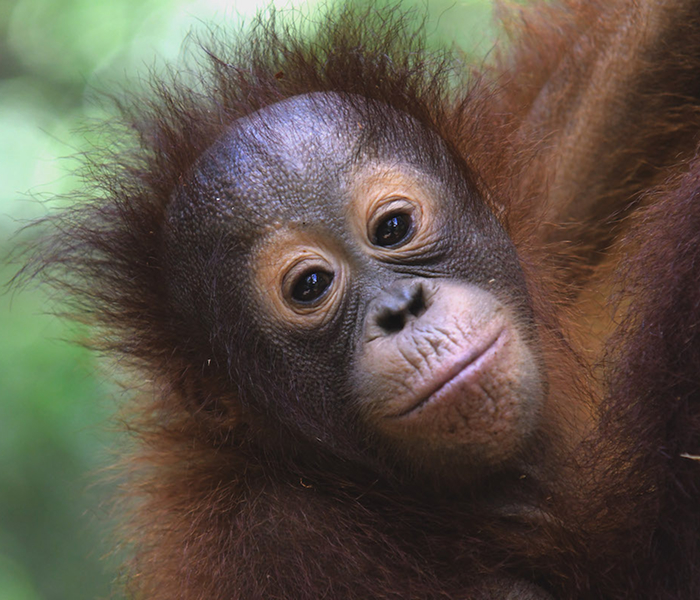
Monyo
Monyo is a young orangutan in forest school, learning essential skills as he grows toward independence.
Baimah
Baimah is a bold young orangutan rescued from captivity and now learning the skills she’ll need to thrive in the forest.