Why Do Negative Interactions Between Orangutans and Humans Continue?
At the edge of a neat, heavily fruiting pineapple plantation, an orangutan stands motionless. It gazes intently at the yellow fruit before it—close, very close. Just a single step away, and it could feast.
Yet, it does not move.
It is not for lack of desire. Rather, it is because that one small step could lead to dire consequences: being chased away, attacked, or even killed.
This scenario is not fiction; it is a reality in the Sentap Kancang Landscape of Ketapang, West Kalimantan, and was examined in the 2024 study “Human-Orangutan Conflict in Sentap Kancang Landscape, Ketapang District” by Runtu, Rifanjani, and Darwati.
Orangutans that enter local plantations are not merely destructive “pests.” In many cases, they are simply struggling to survive… after losing their own homes.
How Do Orangutans End Up in Local Plantations?
To understand these negative interactions, researchers did not merely observe from afar. In the study conducted by Runtu, Rifanjani, and Darwati (2024), the team conducted fieldwork over a period of approximately five months. They interviewed residents, assessed plantation conditions, and gathered data from organizations like YIARI to gain a comprehensive picture of the situation on the ground.
The surge in negative interactions between humans and orangutans in Sentap Kancang is closely linked to the massive forest and land fires that occurred in 2015 and 2019. These fires incinerated vast swathes of orangutan habitat—areas essential for both shelter and foraging.
When the forest vanishes, it takes more than just trees with it; natural food sources disappear as well. Faced with such conditions, orangutans have little choice but to venture out of their natural habitat. And just outside the forest, they find local gardens teeming with fruits and vegetables—the most accessible food sources available.
What often goes unnoticed is that this area is no ordinary, small territory. The Sentap Kancang Landscape and its surroundings are estimated to be home to between 900 and 1,250 orangutans. This makes it one of the most significant populations in West Kalimantan.
The situation is further complicated by the fact that most of this area is designated as production forest rather than a conservation area. This means it enjoys less protection and is more vulnerable to alteration—whether through land clearing or fires.
What Happens When Orangutans Enter Gardens?
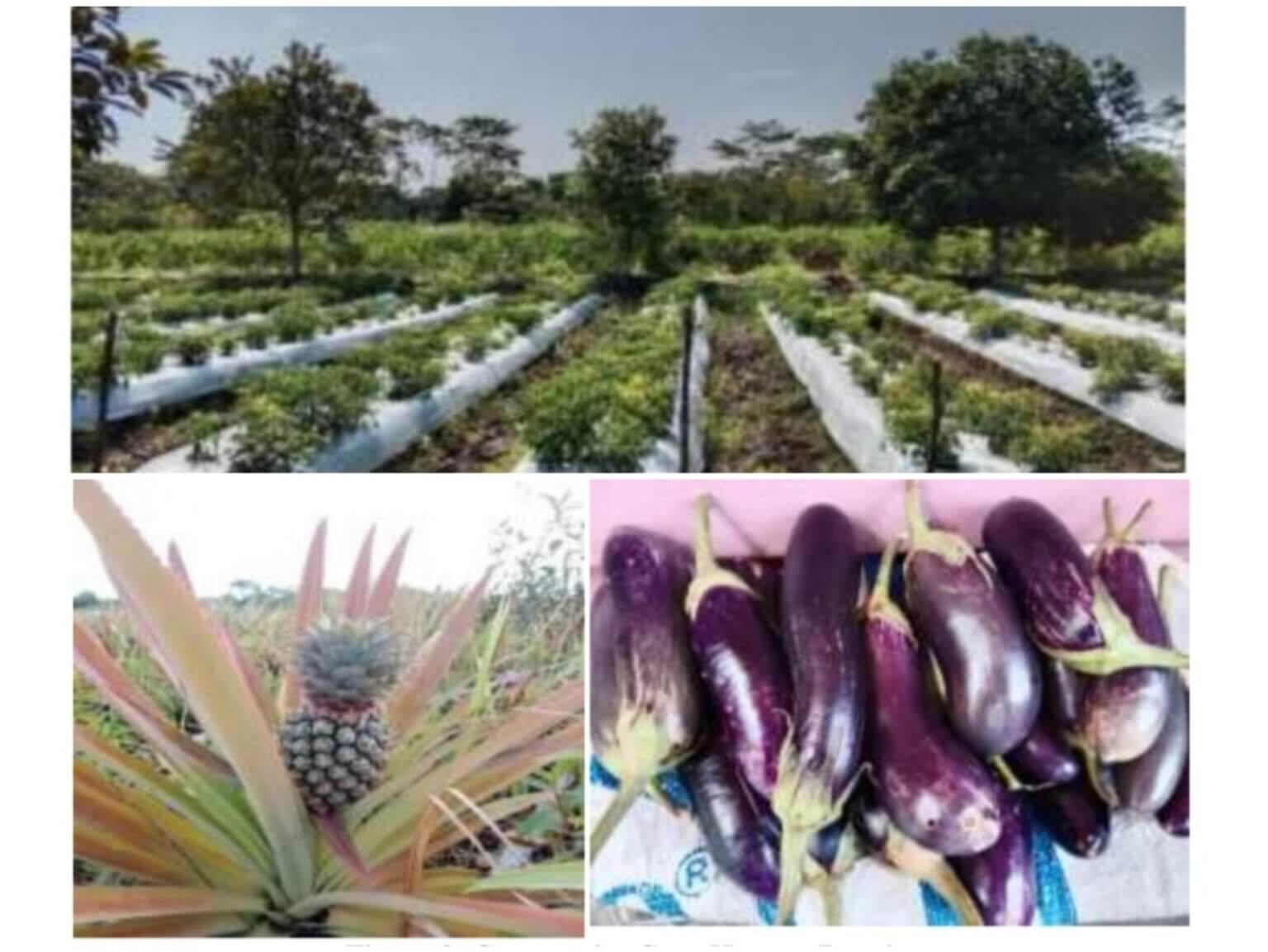
A view of local gardens and crops that frequently attract orangutans / Source: International Journal of Social Science Research and Review
When orangutans do enter these gardens, the reality on the ground is not always as extreme as one might imagine. Not every visit results in major destruction.
In many instances, orangutans simply take what is easiest to reach, such as:
- fruit growing at the edge of the garden
- vegetables ready for harvest
- or crops that lack significant protection
They arrive, eat their fill, and leave. Yet, therein lies the problem.
The majority of residents in this area are farmers cultivating relatively small plots of land—typically between 0 and 2 hectares. On this scale, garden produce is not merely a source of supplementary income; it is a primary means of meeting daily needs.
Consequently, when a portion of the harvest is taken, the impact is keenly felt. It is not necessarily because the quantity lost is vast, but because every part of the garden holds significant value for its owner.
Furthermore, the crops targeted are not chosen at random. Orangutans usually go for commodities that can be harvested quickly, are easy to sell, and serve as the residents’ main source of income. To the orangutan, the garden represents an easily accessible food source; to the resident, it represents the fruits of their labor—vital for their daily livelihood.
Why Do These Negative Interactions Occur (and Keep Recurring)? In Sentap Kancang, the same pattern recurs time and again.
A primary cause lies in the location of residents’ plantations, which directly abut the forest area. Without clear boundaries, encounters between humans and orangutans are difficult to avoid.
In some locations, there is no buffer zone to “contain” the animals’ movements. This situation is compounded by several factors:
- plantations situated very close to the forest
- the absence of effective fences or barriers
- spatial planning that causes plantations and habitats to overlap
Because these factors remain largely unchanged, negative interactions continue to recur. Whenever an orangutan crosses that boundary, the potential for a human encounter is always present.
It Turns Out Negative Interactions Aren’t Just About Financial Loss
Interestingly, not all residents view the presence of orangutans in the same way. Interviews conducted by researchers reveal that community responses are shaped not only by direct experience but also by perception.
Broadly speaking, residents fall into two groups:
- those who have suffered losses and feel aggrieved
- those who have not been directly affected but feel anxious
The first group typically has concrete experience—observing a decline in crops or harvests that fell short of expectations. Meanwhile, the second group is driven more by a sense of wariness, stemming from the appearance of large wild animals near their daily activities.
The mere presence of an orangutan near a farm or home is enough to trigger concern.
It is not just about what actually happens in the fields, but also about how the situation is perceived. When experience and fear intersect, perspectives on orangutans can shift.
An initially neutral attitude can transform into one of wariness or even outright rejection of the orangutan’s presence.
How Do Residents Respond to Orangutans?
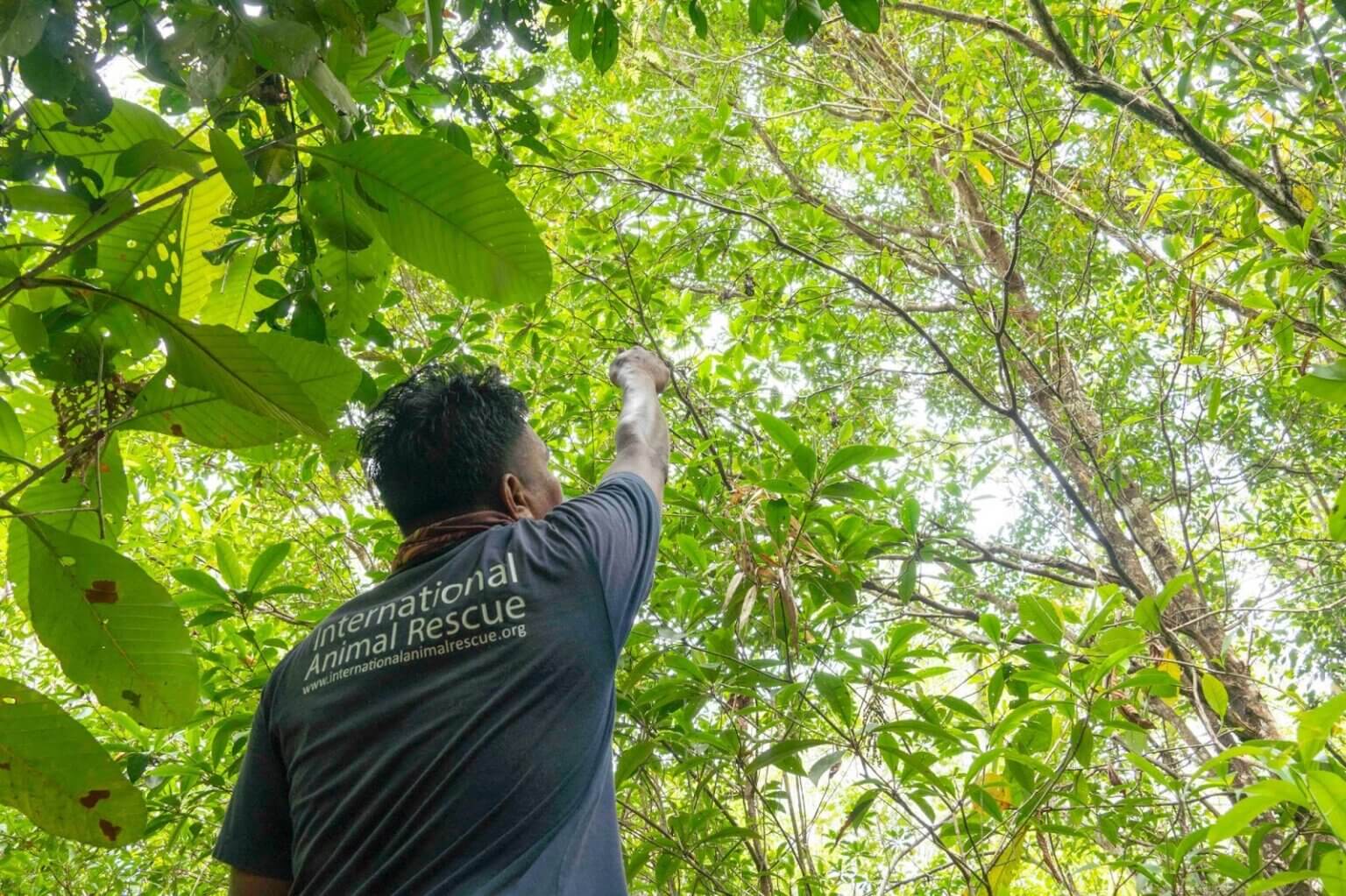
The YIARI Orangutan Protection Unit conducting a patrol in Tempurukan Village (Muffidz Ma’sum | YIARI)
When actually confronted with an orangutan, residents’ choices turn out not to be as extreme as often imagined.
Research data shows that the majority of residents actually opt for relatively safe measures:
- 68% report the incident to authorities, such as the BKSDA (Natural Resources Conservation Agency) or conservation organizations.
- 16% attempt to drive the animal away themselves, usually by making loud noises.
- 16% choose to avoid the animal or leave the area.
These figures highlight a crucial point: most residents do not immediately resort to violence. They tend to seek safer approaches—for both themselves and the animal.
Orangutans entering farms or residential areas risk being labeled as “pests.” If negative interactions recur without proper management, dangerous situations—harmful to both humans and the orangutans—could easily arise.
So, What Is the Solution?
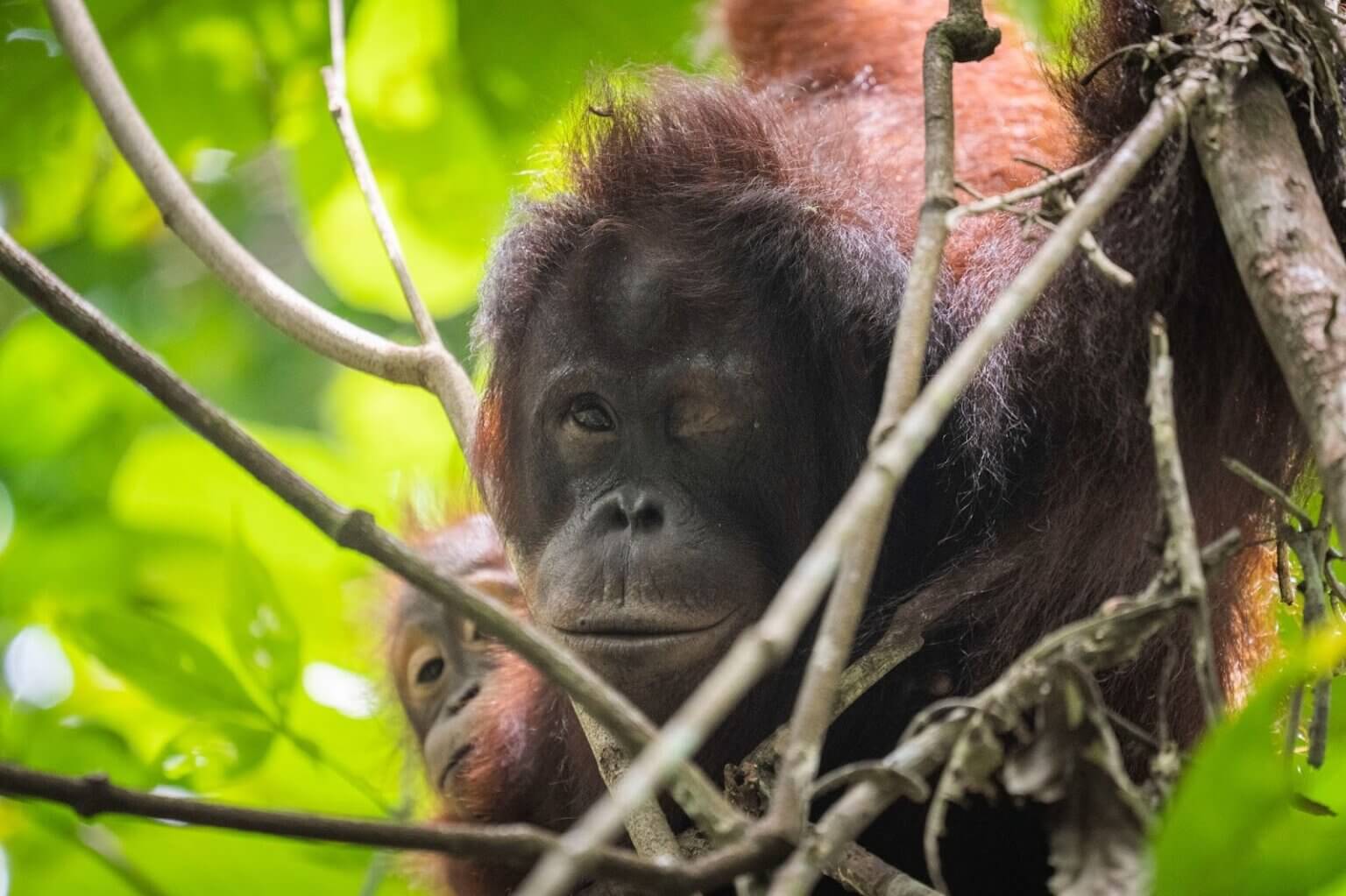
Bornean orangutans Temon and Mawa together at the YIARI Rehabilitation Center (Muffidz Ma’sum | YIARI)
Orangutans possess vast home ranges and a strong memory for food sources. This means that if relocated, they may return to their previous location, especially if food is still available there. Consequently, relocating the animals is not a long-term solution. Several measures have already been implemented, including:
- routine patrols by joint teams (including YIARI and BKSDA)
- educating residents not to harm the animals
- using simple devices, such as homemade cannons, to drive them away without causing injury
Additionally, there are long-term recommendations, such as:
- establishing buffer zones with plants that are not orangutan food sources between the forest and plantations
- exploring compensation or restitution schemes for affected farmers
Negative interactions of this kind cannot be resolved by protecting only one party. Residents need to feel safe, yet orangutans must also be protected. A more balanced approach is required—one that views both humans and orangutans as parties that are equally affected.
Interactions of Our Own Making
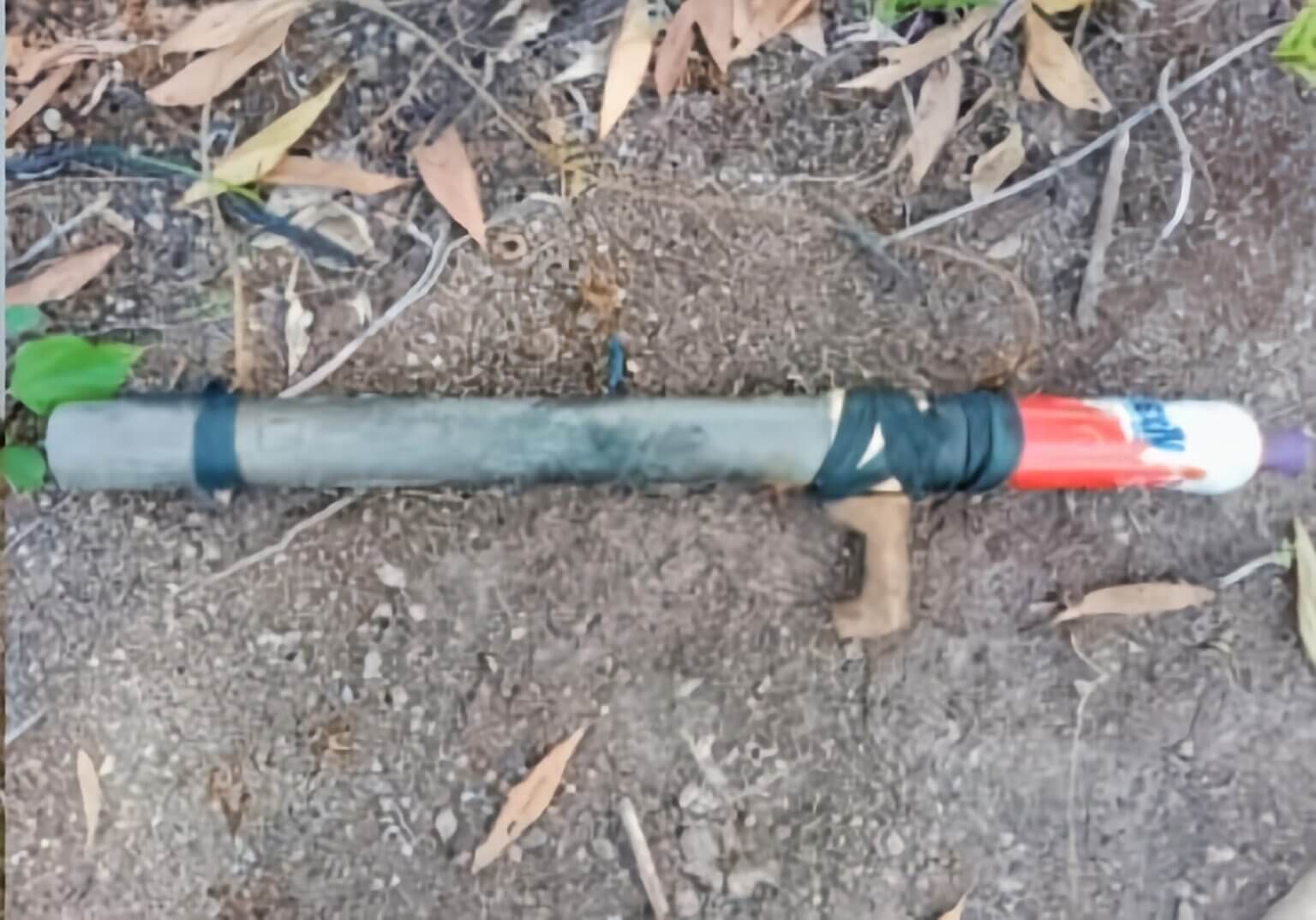
Homemade cannon constructed by the Partner Team / Source: International Journal of Social Science Research and Review
The negative interactions between humans and orangutans in Sentap Kancang did not arise overnight, nor is this a problem that can be solved with a single quick fix.
Unless the root causes are addressed, situations like this will continue to recur.
Therefore, the challenge is no longer merely about keeping orangutans away from residents’ plantations, but finding ways for both to coexist without requiring mutual sacrifice.
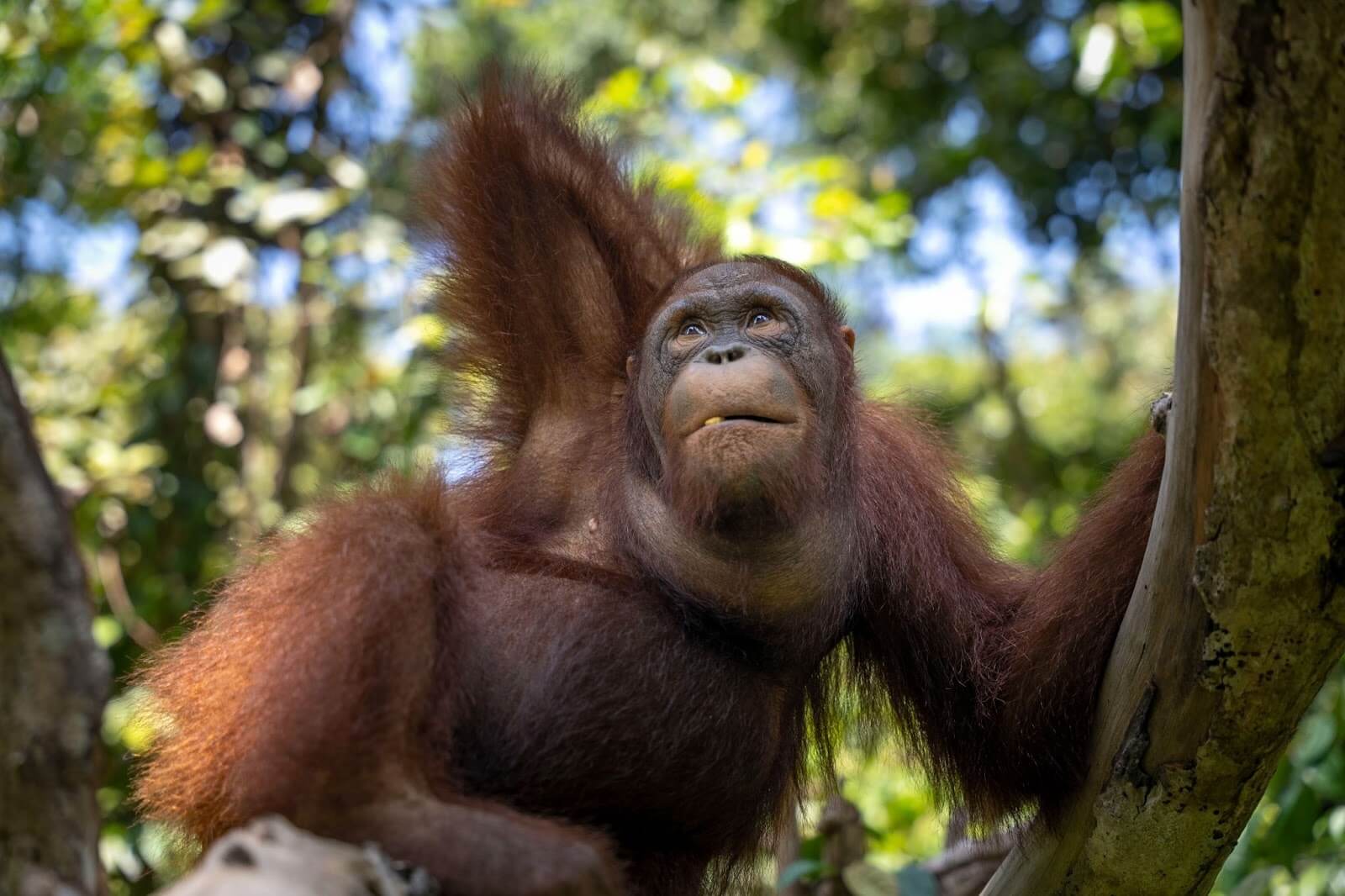
Featured image: Rahman, a Bornean orangutan, in a tree at the YIARI Rehabilitation Center (Muffidz Ma’sum | YIARI)
Story originally published April 17, 2026 by the YIARI communications team. See the original article (in Indonesian) here. Translated by Orangutan Outreach and published July 14, 2026.
Orangutans Need Your Help!
Thank you for your generous support in these challenging times.
Donate Adopt
Adopt an Orangutan
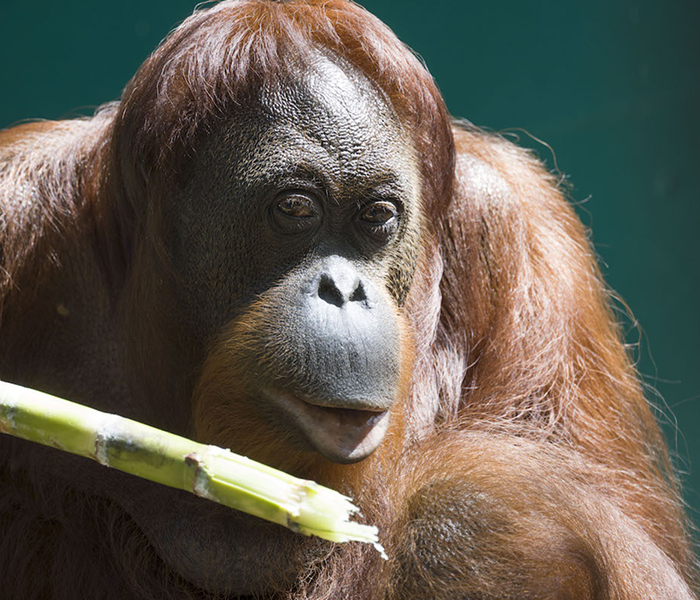
Pingky
Pingky is a calm adult orangutan rescued from long-term captivity and now living peacefully in lifelong care.
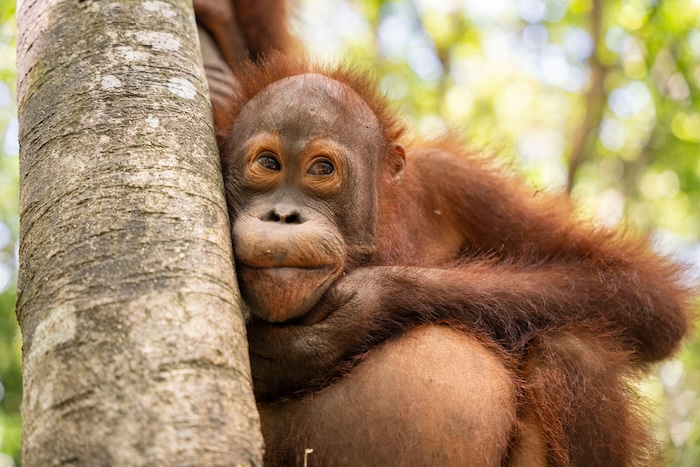
Gatot
Gatot is a playful young orangutan growing in confidence as he learns forest skills in rehabilitation.
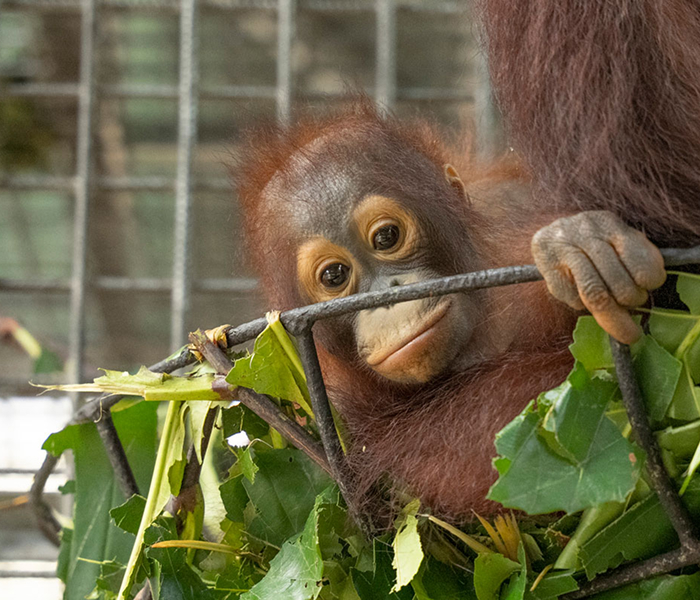
Mawa
Mawa is a gentle young orangutan rescued as an infant and now learning the skills he needs to one day return to the forest.
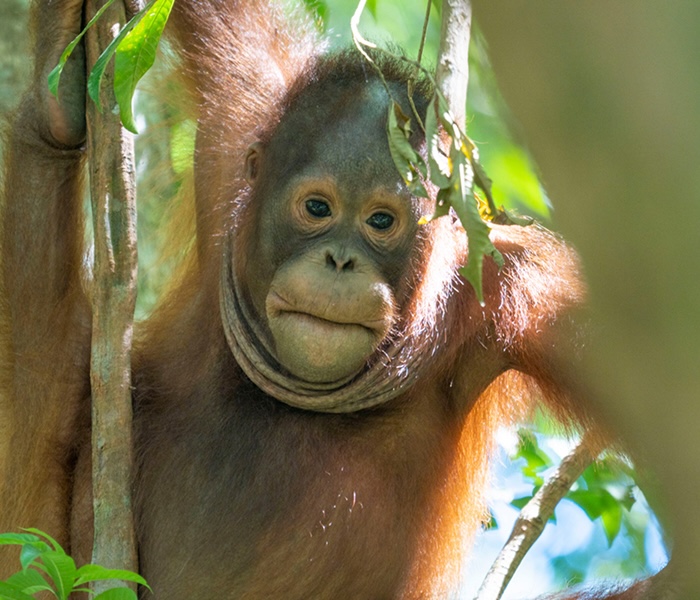
Kukur
Kukur is a young orangutan rescued from captivity and now learning essential skills as he grows in rehabilitation.
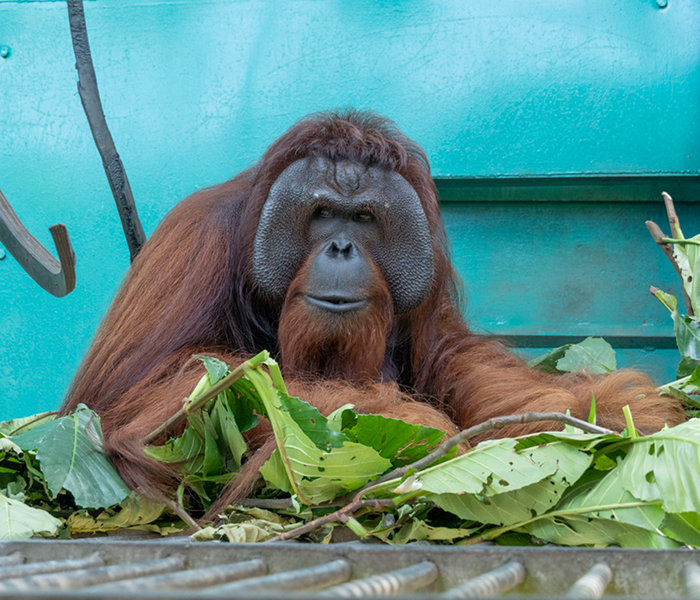
JoJo
JoJo is a gentle adult orangutan rescued from severe neglect and now enjoying a safe, enriched life in long-term care.
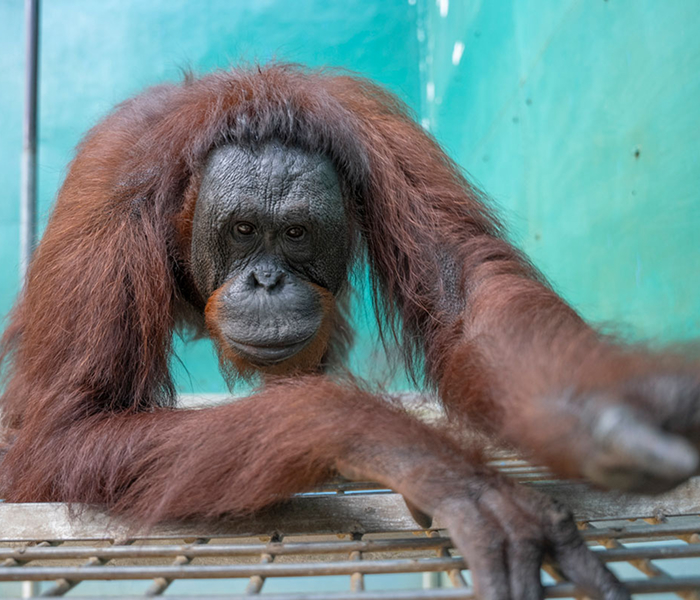
Neng
Neng is a gentle adult orangutan rescued from captivity and now living safely in long-term care with her companions.
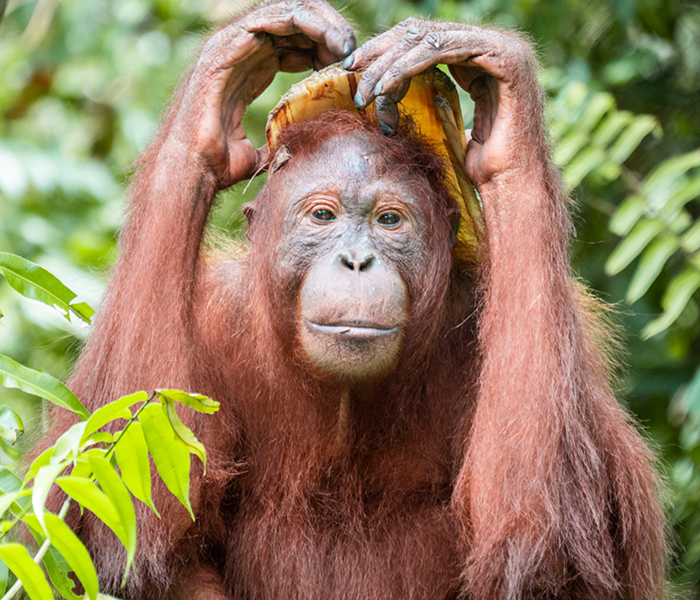
Rickina
Rickina is a calm and thoughtful orangutan rescued as an infant and now living safely in long-term care.